

Honor Without Goodness
Robert E. Lee and the Reckless Myth of Rebel Rectitude
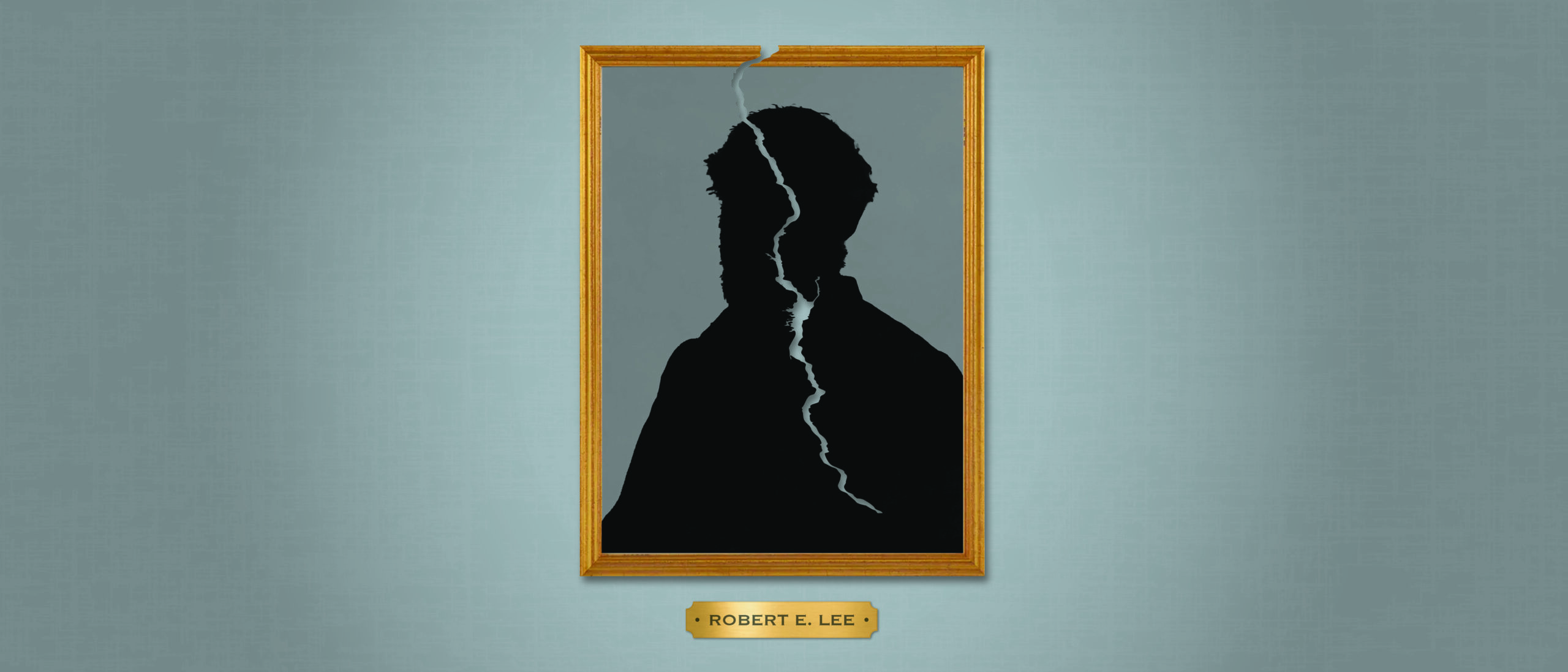
August 26, 2026On any given day, cadets at the United States Military Academy at West Point, New York, are too busy studying and otherwise trying to avoid demerits and consequent punishment to notice the 20-foot portrait of antebellum student and superintendent Robert E. Lee in his Confederate uniform, restored last year to Jefferson Hall library’s second-floor study room. Most graduates do not remember this painting in the original library, subsequent library, or anywhere else on campus. Nonetheless, West Point is skittish about it: Neither the library nor the academy’s public affairs officer would answer factual questions such as where it was stored during its brief exile from public view.
The controversy is fading, but indifference to the portrait’s symbolism takes military virtues for granted, as rehabilitating Confederates as public role models is antithetical to West Point’s basic values. Perhaps cadets will reckon that treason might one day be praised so long as one loses with aplomb. More seriously, cadets could learn that they need not think too much about the values of the country they will serve and their own duties as citizens.
Lee is a complex figure—one who provides an excellent model of narrow martial virtue that, while necessary, is insufficient for the American military; it is a model that the United States sought to transcend at its birth and again with the Civil War and still struggles with today.
In 2022, on the recommendation of the congressionally created Naming Commission, West Point removed Lee’s Confederate portrait and certain aspects from memorials on campus (e.g., Reconciliation Plaza and “Honor Plaza”) and renamed infrastructure that had been named for Lee and fellow Confederate generals P. G. T. Beauregard and William J. Hardee. The commission advocated retaining a separate painting of Lee among the West Point superintendents’ portraits, to remove honors conferred on Confederates without erasing the historical record.
But if this is all about merit, lethality, and, most importantly, “winning,” why rehabilitate a loser—much less the leader of the side that lost one of the most consequential wars in American history?
Last year, the Trump administration restored many pieces of Confederate iconography around the country, including West Point’s portrait of Lee. Secretary of Defense Pete Hegseth has wielded Lee as a cudgel in his ongoing culture war to sweep away the “debris” of “political correctness,” race and gender quotas, “Anti-American ideologies,” and “social engineering” in favor of returning to a past golden age where “merit reigns.” But if this is all about merit, lethality, and, most importantly, “winning,” why rehabilitate a loser—much less the leader of the side that lost one of the most consequential wars in American history?
Like the Thermidorian Reaction to the French Revolution’s worst excesses, Hegseth’s counterrevolution against the “radical left” recklessly pursues its own vendettas and purges and teaches cadets the wrong lessons, to the US military’s detriment.
Which “Golden Age”?
Following the Civil War, West Point wrote its unique Reception Day oath of allegiance to prioritize loyalty to the United States over “any and all allegiance, sovereignty, or fealty I may owe to any State or country whatsoever” and banned Confederates—in person, name, or likeness—from campus for some time. But from the turn of the century through the 1960s, people erected new Confederate monuments across the country to promote an emerging Lost Cause narrative and reinforce Jim Crow laws.
In 1950, West Point commissioned Lee’s portrait for its sesquicentennial celebration. Curiously, artist Sidney Dickinson painted Lee in the pose from the famous photograph taken one week after Lee’s surrender at Appomattox; noted Lee biographer and champion Douglas Southall Freeman hated the portrait accordingly. In 1952, West Point proudly unveiled this painting in the then-library, paired with an 1866 painting of Ulysses S. Grant that was moved from Cullum Hall.
Pairing Lee’s and Grant’s portraits has historical and educational purpose, as one cannot make sense of a war without considering the opposing side. But today, Grant adorns his namesake hall, while Lee hangs alone in the library. Hegseth argues, “Unlike the left, we don’t believe in erasing American history—we honor it.” The question is, Which history are we honoring?
West Point’s postwar rapprochement and inclusivity culminated in Reconciliation Plaza, which romanticizes connections between graduates on opposite sides of the war. But whitewashing the treason and horrific bloodletting of a war that divided American families in the North and South trades long-term social cohesion for short-term reunion.
Proponents of these “golden age” narratives want Lee’s personal bravery without the moral decrepitude of the defense of slavery; his fidelity to his state without the treason against his country.
These narratives intentionally and ambiguously invoke an imagined “golden age,” for which proponents pick and choose favorable aspects of different pasts while ignoring accompanying flaws and necessary trade-offs. This incongruous pastiche overlooks fundamental political and moral disputes at the root of Lee’s choice to leave the US Army. Proponents of these “golden age” narratives want Lee’s personal bravery without the moral decrepitude of the defense of slavery; his fidelity to his state without the treason against his country.
Citizen-Soldiers
Militaries are tools, but military personnel in liberal democracies are not mere fighters—they are also citizens. As George Washington, Continental Army commander in chief, assured the New York Provincial Congress in 1775, “When we assumed the Soldier, we did not [lay aside the] Citizen.” Unlike in autocracies, service in liberal democracies requires more than personal bravery, honor, or dignity: It demands citizenship.
Narrow focus on personal traits leads to pursuit of immoral ends and the mistaken idea that lethality alone can win wars.
Courage, resolution, and honor are necessary but insufficient for officers in any liberal democracy—especially United States service academy graduates. From Lee, West Point cadets should learn the difference between physical courage and moral courage, between physical skill and moral acumen. Lee fought bravely and often well but ultimately lacked proper moral judgment. Narrow focus on personal traits leads to pursuit of immoral ends and the mistaken idea that lethality alone can win wars. Lethality too, while necessary, is insufficient, which is why the Confederacy lost the Civil War despite their military successes in the first two years.
Honor Untethered, Courage Unfocused
At Lee’s portrait debut, former superintendent Major General Maxwell D. Taylor declared that West Point had “no right” to judge its graduates’ “politics or . . . personal opinions,” as the academy’s only concern was producing “military leaders, men of character, capable of leading the citizen soldiers of our country to victory in battle.” As they were “intrepid, steadfast, honorable soldiers,” he said, “it is proper for West Point to take pride, not of necessity in the rightness of its Confederate graduates but in their uprightness.”
Taylor’s remarks were staggeringly nihilistic. He saw the Long Gray Line as mere soldiers, but they are also citizen-soldiers. Citizen-soldiers should understand that, as he put it, violent rebellion transcends “political opinion,” treason renders graduates “derelict to the standards of the Corps,” and traitors—however physically courageous or martially skilled—are “cowardly, dishonest, evasive or recreant to their principles.”
The superintendent made a common mistake: He posited that honor, courage, and resoluteness are good regardless of context. But context is essential. Untethered to a foundational morality, these traits are ethically ambiguous; only when directed toward something good or ill do honor, courage, and resoluteness become virtues or vices. As Immanuel Kant argues, the only thing good in and of itself is a “good will.” Every characteristic is good only if directed toward good ends, and evil if directed toward evil ends. By themselves, they “have no inner unconditional worth.”
So one should ask of Russian soldiers who fight honorably in invading Ukraine or of suicide attackers who courageously face certain death: To what end? It is dangerously shortsighted to extol personal traits as virtues independent of the object—in Lee’s case, the Confederacy—toward which they are directed.
Duty to what? Principle of what kind? These cannot stand alone or be self-contained: Duty and integrity must refer to an object that makes fulfilment of duty and demonstration of integrity either praiseworthy or blameworthy. In West Point’s motto, the object of duty and honor is country.
Below Lee’s Confederate portrait hangs a quote from him: “There is a true glory and a true honor: the glory of duty done—the honor of the integrity of principle.” Duty to what? Principle of what kind? These cannot stand alone or be self-contained: Duty and integrity must refer to an object that makes fulfilment of duty and demonstration of integrity either praiseworthy or blameworthy. In West Point’s motto, the object of duty and honor is country.
But not any country, as co-nationalism is insufficient reason to command political commitment: Faithfulness is virtuous or vicious depending on the moral valence of the society one serves. Whether treason is wrong depends on what one betrays, as well as what one commits treason for. Betraying the Soviet Union could have been a moral good, for example, but not if such treachery involved selling nuclear knowledge to terrorists.
Societies that make good faith efforts (even if they sometimes fail) to instantiate universal principles of right depend on the fidelity of their citizens; thus, fidelity to such societies and their principles is a virtue, and treason against them is a moral wrong. Devotion to the US Constitution—as a particular attempt to instantiate universal principles of right—is virtuous, and loyalty to Virginia and the Confederacy, which rejected universal principles of right by embracing slavery, was a grave vice. Superintendent Taylor was wrong: There may have been courage on Lee’s part, but there was no virtue in standing upright in a false field.
Moral Autonomy of the Officer Corps
The differences between present-day US oaths of allegiance for enlisted personnel and commissioned officers amplify the requirement to identify good ends and direct oneself toward them. Both oaths pledge to defend the Constitution against “all enemies, foreign and domestic”—the latter distinction first added to the officer oath during the Civil War. Enlisted personnel then promise to obey the orders of superior officers and the president, while commissioned officers swear that they “take this obligation [to defend the Constitution] freely, without any mental reservation or purpose of evasion.” The commissioned officers’ commitment was also added in 1862 during the Civil War to target Confederate sympathizers, assets, and agents in the Union, but it also serves to emphasize the importance of moral decision-making.
What makes humanity sublime, says Kant, is the ability to not only grasp but also be governed by the moral law that one legislates with one’s own reason. In emphasizing commissioned officers’ autonomy, soundness of mind, and professionalism in choosing to uphold the Constitution, the oath highlights the expectation that commissioned officers grasp the moral law and be governed by it.
Despite privately opposing Virginia’s secession, Lee rejected his commission after 32 years in the US Army—he was hardly a green officer anymore—to follow Virginia to the Confederacy. It is surprising and little known how anomalous that was. Although venerated for his loyalty to his home state, he was an outlier: Not only was much of Lee’s extended family loyal to the Union, but Lee was one of 10 US Army colonels from Virginia who resigned and joined the Confederacy. Of those 10, five others along with Lee were West Point–educated; the other five kept their commissions. As such, Lee displayed uncommon valor—but in failing a moral crucible that his peers passed.
Lee chose to be a mere tool of the state of Virginia. He behaved not as a citizen-soldier, who would have recognized the Confederacy’s lack of constitutional and moral legitimacy, but rather as a subject.
To be a citizen requires moral contemplation, moral autonomy, and moral self-legislation.
However courageous or brilliant a military commander he was, Lee’s virtues were too narrow for what the US military demands, then and today. Lee offers a limited model deeply flawed by its myopia, as what distinguishes militaries of liberal democracies from those of autocracies is that their warfighters are also citizens who must think beyond mere tactics, operations, and even strategies. To be a citizen requires moral contemplation, moral autonomy, and moral self-legislation.
These duties of citizenship are not trumped by the duties of military service; rather, the duties of citizenship are the foundation for military duties, else warfighters would not know what they should defend, or how. To commend Lee’s bravery and loyalty to his home state without qualification jettisons that foundation, stunts future officers’ education and development, and dangerously narrows the US military’s mission. So as Confederate General Robert E. Lee once again keeps watch over their studies, West Point cadets should contemplate how to direct their actions in adherence to the moral law so that their character traits become virtues: They should challenge themselves to become the morally thoughtful and responsible citizen-soldiers they are tasked to be—and which Lee was not.
Yvonne Chiu is a Jeane Kirkpatrick Visiting Fellow at the American Enterprise Institute, a professor of strategy and policy at the US Naval War College (USNWC), and author of Conspiring with the Enemy: The Ethic of Cooperation in Warfare. Views are her own and do not represent anyone else’s.